
Think before the bin
Reduce
Avoid products and packaging that are unnecessary, short-lived or difficult to deal with responsibly.
Reuse
Keep bags, containers, furniture, clothes, tools and household goods in circulation for as long as they remain useful.
Repair & share
Fixing, borrowing and sharing can replace a new purchase entirely — especially for things used only occasionally.
Refill
Where a refill system works, it avoids manufacturing and disposing of a new container each time.
Recycle
Use local recycling routes correctly for material that genuinely has reached the end of its useful life.
Woodstock's Swap Shops
One of Sustainable Woodstock's earliest practical projects was the community Swap Shop. People brought clean, usable household items they no longer wanted and took away things they could use — usually without money changing hands.
The value was bigger than a single morning's diversion from landfill. A Swap Shop makes reuse tangible: the lamp, saucepan, toy or book one household has finished with may be exactly what another needs.
Plastic-free work
Single-use plastic is a major part of the waste problem, but it deserves its own treatment because the strongest solutions are usually upstream: remove unnecessary items, switch to reuse and refill, and work with businesses and suppliers.
Explore Plastic-free Woodstock →
Litter is the visible end of the chain
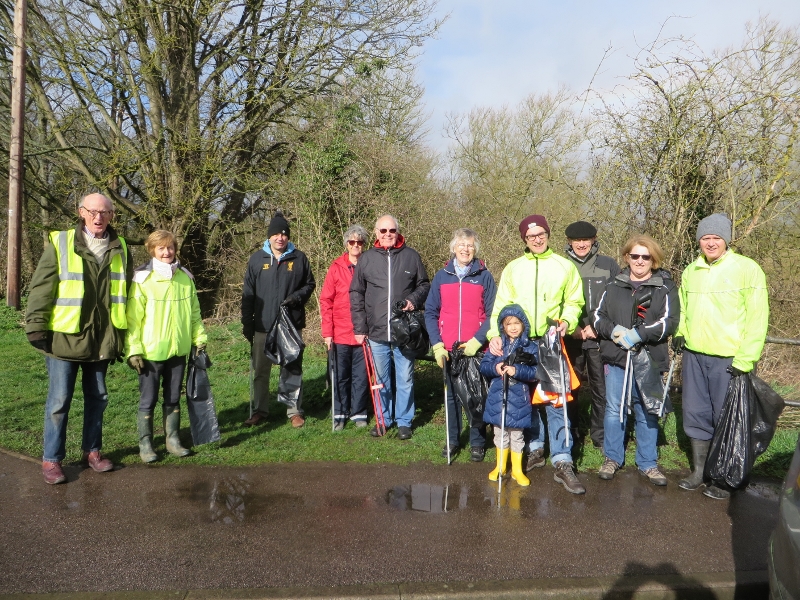
Sustainable Woodstock has organised and supported litter picks around the town and surrounding countryside. They are useful community events and improve local places immediately, but they also show why prevention matters: once packaging has escaped into streets, verges and waterways, somebody has to recover it by hand.
What residents can do
- Buy second-hand and pass on usable things before disposing of them.
- Choose durable products that can be repaired, refilled or have parts replaced.
- Use local charity, reuse and recycling routes rather than putting useful materials into general waste.
- Carry reusable bags, bottles and cups where they genuinely displace single-use items.
- Plan food purchases and storage to reduce avoidable food waste.
- Ask retailers and suppliers for lower-waste options — customer demand changes what is stocked.
What businesses and organisations can do
Waste audits do not need to be complicated. Look at the things you buy repeatedly and throw away repeatedly. Which can disappear, be ordered in bulk, use returnable transport packaging, move to refill, or be replaced by a reusable system?
For single-use plastics specifically, our local copy of the Plastic Free Communities business toolkit gives a useful structured starting point.